Pub by: Juggernaut Books
“how while making possible progress and freedom, it simultaneously inflicts new forms of regression and enslavement; how barbarism and civilisation, far from being opposed, are inseparably entangled.”
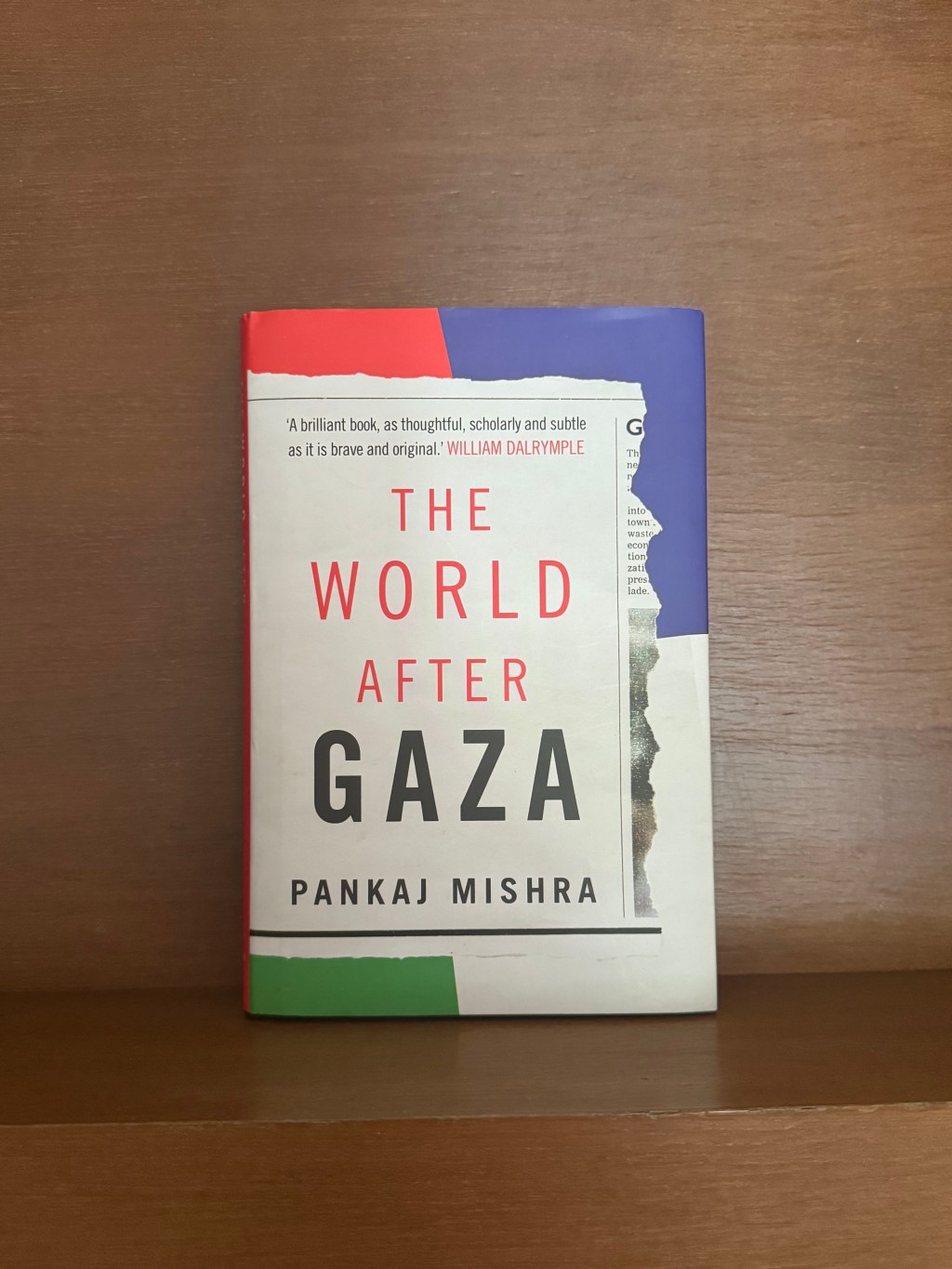
‘The World after Gaza’ by Pankaj Mishra single-mindedly questions Israel’s crackdown on Gaza, the cruelty and terror inflicted on Palestinians and the support it has received from the Western world.
The book emphasises the need to introspect, to face the new realities and new dynamics of subjugation and justice, freedom and slavery, and the blurring lines of the once victim turning into an oppressor.
“I am conscious of writing in a strange chasm, between an insufficiently understood past and a menacing future, whose most sinister signs must be quickly identified.”
The book actually talks more about ‘before Gaza’. The author claims that the memory of ‘shoah’ was carefully preserved and “belatedly constructed, often very deliberately and with specific political ends.” The entire book is a historical analysis of the coming into existence of the state of Israel (alongside colonialism in other parts of the world, Asia, and South Africa) by the European powers. Questions have been raised, too, as to how Israel has got away with so many wrongdoings and wrongful support by the Western world.
This book is not about Gaza or Hamas, which is mentioned fleetingly throughout the book. This book is a reflection on history, its wars, its prejudices, its seeming victors and desolate victims; it is about a world where the rights and wrongs are blurred, ethics and crime are interchanged easily and the future, which now seems bleak and vague.
Pankaj Mishra’s book reads like a thesis… backed powerfully by intense research with innumerable and on-the-dot references to books and events. It reads like pages and pages of thoughts and arguments to demonstrate his thinking. The book is a heavy read (which can get tedious at times), like a scholarly article running into 275 pages.
There have been criticisms about the book being prejudiced. Definitely, the book is narrowly visioned, but the author makes no bones about it being so from page 1 itself. As he says, “I felt almost compelled to write this book, to alleviate my demoralising perplexity before an extensive moral breakdown, and to invite general readers into a quest for clarifications that feel more pressing in a dark time.”
 Preeta Chag