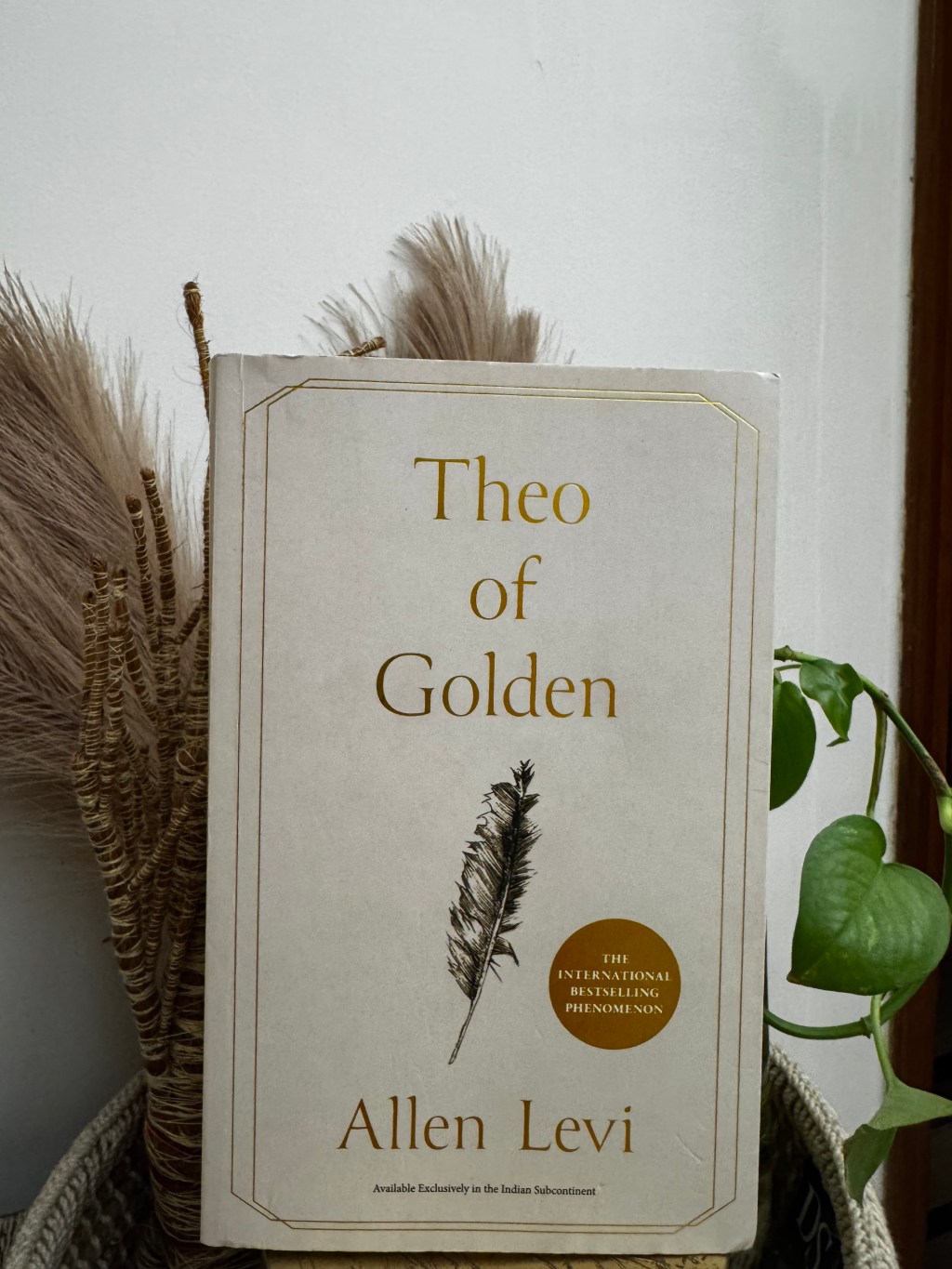
Pub by: Atria Paperback- An imprint of Simon and Schuster (2025) USA
Fontana-An Imprint of Harper Collins Publishers (2025) UK
‘Theo of Golden’, the debut novel by Allen Levi has become one of the most popular books this year. Initially self-published in 2023, the book was then taken up by a major publisher and reached the New York Times bestseller list.
What is it about this book? What makes readers gravitate towards it?
The reason seems to be simple. In today’s volatile times, ‘Theo of Golden’ talks of goodness and faith. Love and compassion. Kindness and generosity. It is a heady mix of beauty, art and the quaint wholesomeness of a small town.
The story follows Theo, who comes to Golden, a small Southern town, and buys portraits hanging on the walls of the local coffee shop, The Chalice. He then begins to gift those portraits to each of its subjects.
And thus begins a ritual of bestowals. And stories.
But it is not just a bestowal of the portrait. It is a bestowal of kindness. Of love. Of goodness. Of compassion. And of viewing life differently.
The book is a gentle and sweeping, extolling the old-fashioned good virtues of life. Of sitting and talking. Of sitting and seeing. Of sitting and listening. Of sitting and ruminating.
Theo is the mystery figure in the novel. “He has stumbled upon his purpose as the newest resident of Golden.” (page 72) Who is he? Why has he come to this small town, Golden, from the glittering lights of New York? We begin to gradually discover his Portuguese background and his affluence. Allen Levi tantalises with slow and measured disclosures about Theo.
We meet the various characters of Golden through his bestowals. Shep, the coffee shop owner, on whose wall the portraits are hanging. Minnette, his first bestowal. Ellen, a homeless girl who is conferred with dignity and talent by the author. Kendrick. Simone. Frankie Knowles. And so many others. Theo is fascinated by the faces in the portraits, and many lines are devoted to his efforts to understand the emotions underlying each face. Who, in today’s world, has the time to do it? Theo makes us pause and try to look at human faces more closely.
His friendship with Tony, the bookseller and Mr Ponder, his consultant are the conduit of gradual information about Theo. Mrs Gidley, Mr Ponder’s secretary, signifies scepticism about the unknown Theo coming into town, but ultimately is won over by his goodness.
The book is gentle and thoughtful. “I fear we own all of the world’s hurts together.” (page 151). This line characterises the humaneness in the book.
“Bedraggled, unkempt, inconsolable, he walked. Furious, frightened, fitful, he walked .” (page 99)
Theo walks to heal and to think.. Watching the sun set each evening over the river is Theo’s unmissable ritual. Each small deed of our day-to-day lives, which we take for granted, are pointed out for moments to pause and reflect.
There is a wisdom about sadness in the book. “Sadness can make us bitter or wise. We get to choose” (page 214). Sadness as an emotion is to be embraced, rather than to be cried over.
Art and thoughtfulness line each page… either through conversation or through books, music, and painting. “Observe sky. Observe canvas. Brush to palette, mix, color, brush to canvas, stroke or dab or blend.” (page 177). Reading Asher paint, is like a poetry in motion. The pages kindles faith in age-old rituals of communication and art (letters, painting, conversations). It flows from page to page gently, like a river finding its path and flowing ahead steadfast, sure of a direction and planning
The book makes you believe in goodness.
Makes you realise there could be small miracles.
Makes you affirm faith in connections.
And makes you once again believe in kindness and humanity.
“The magic of story.
The wonder of words.
The fertility of imagination. “
‘Theo of Golden’ will definitely revive your faith in humanity.


Leave a Reply