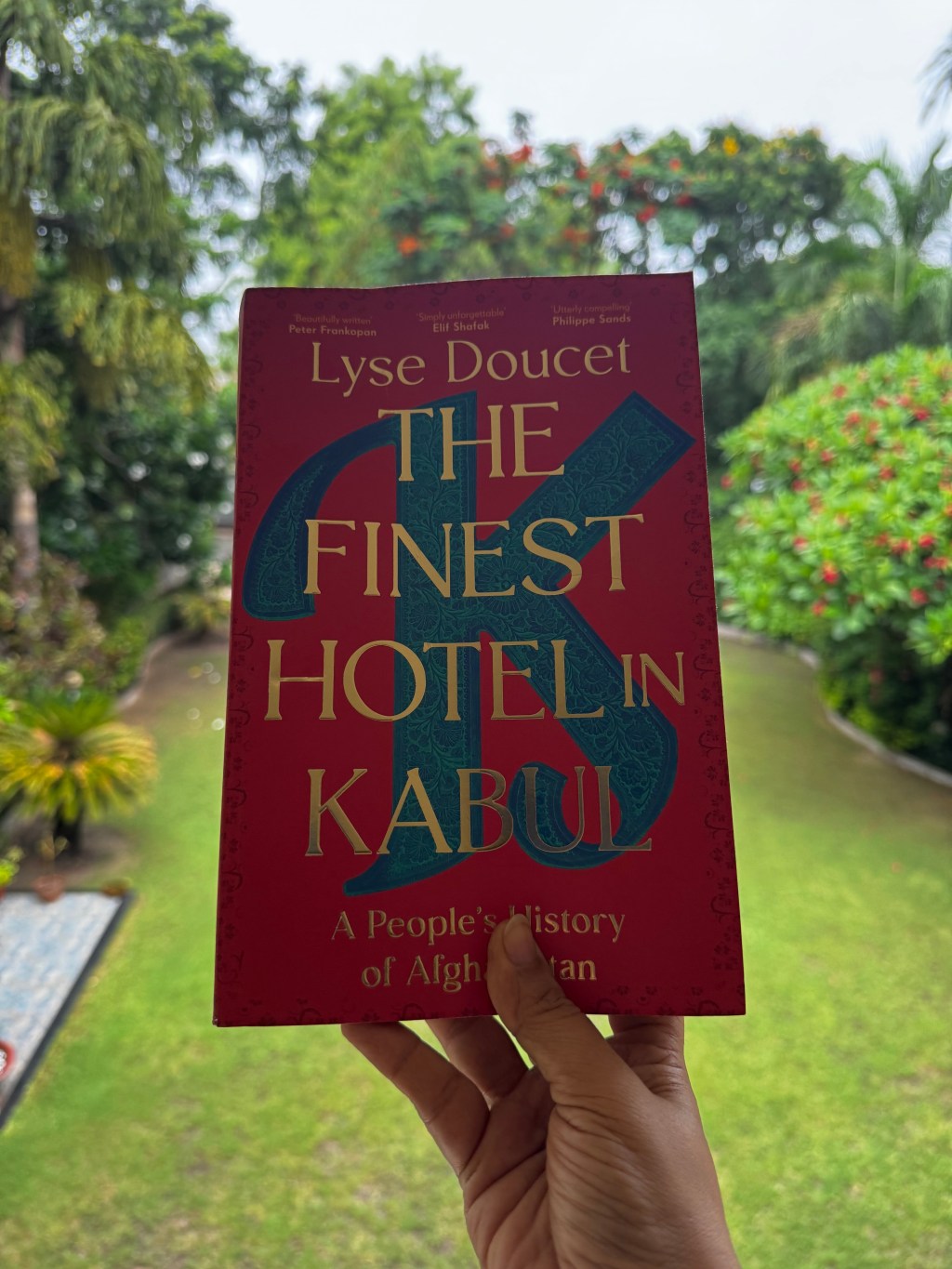
Pub by: Penguin Random House UK (2025)
The title says it all.
September 10, 1969. The doors of Hotel Inter-Continental, Kabul opened to reveal a dream. Meant for the fortunate or those with a fortune, “Hotel Inter-Continental Kabul felt like a different country.”
Established, mirroring the aspirations of Afghanistan, its then rulers and the people, the hotel was launched with great fanfare and elegance, announcing Zahir Shah’s endeavour to modernise the country. The Hotel was a dream for those who looked up to it. Perched high atop a hill, “the whole place was an iridescent bubble floating above the city’s cares.”
But it was not just a building. “the Inter-Con was an unbreakable constant. A front-row seat to history.”
Lyse Doucet, Chief International Reporter from the BBC, has created the story of Afghanistan through the lens of the Inter-Continental Hotel and its employees.
Hazrat. Amanullah. Mohammed Aqa. Abida and others. The tale of the country is told through their viewpoint: the hotel’s routine, their daily bid to survive, and life amid a fractured present. It is the fragments of their story which narrate the tale. Their survival, and sadly, some of the fatalities.
From Zahir Shah to the Soviets, the Taliban, the US and allied countries’ occupation and back to the Taliban rule today, the hotel evolves as per the changing political landscape of the country. Each time a new ruler came in, the posters behind the hotel’s front desk changed.
1981. The Soviets marched in. “The hotel saw everything. Now it also had the best view in the house for the Soviet sound-and-light show.” Day after day, Soviet helicopters thumped through the sky, and in came a new political rule. Sadly, it was the year in which the Inter-Continental Hotel parted ways with its international owners and became a government-owned hotel.
1992. The entry of mujahideen into Inter-Con stamped the change further. “Since the day the Inter-Continental first flung opened its doors, it had never been a place for this traditional attire…..Now it was everywhere, caked with dirt and wrinkled by war….wearing their signature soft rolled-up pakol caps, others in swirling turbans.” The mujahideen’s glee at being introduced to revolving doors and lifts was the mark of the change to descend upon.
1996. “The Taliban entered the hotel without a shot fired.” A raucous procession of Taliban went from room to room, smashing TV sets and music systems, the bell of the new rule being rung. The fighting had so badly ravaged Afghanistan and was left so far behind in communications, that it seems incredible today. In the year 2001, when 9/11 happened, the country was puzzled. “how such an audacious assault could have been planned in a country with no landlines, not many satellite phones, hardly any computers and erratic electricity-a world almost completely unplugged from the twenty-first century.”
2002. The ballroom of Hotel Inter-Continental. Hamid Karzai is “handed a shiny telephone that fitted neatly in the palm of his hand.” And thus he makes the country’s first mobile phone call.
2021. “A new Taliban order was taking place in the Inter-Con. The older staff knew the drill, turning up in perahan o tunban.”
Did any regime, in trying to outbid one another, think of the people of the country… what did they want? What did they aspire to? They were the helpless victims of the war facing scarcity, starvation, a daily dose of missiles and gunpower… for years and never-ending.
The book eerily captures the country’s turmoil, keeping the narration insulated within the walls of Inter-Con. The fights are going on, Kabul is ravaged by anarchy, people are dying and starving … and Inter-Con is the elitist post, perched high atop the city, affected and disturbed … thronged by journalists and ruling dignitaries. Because it was the baton of pride for all regimes, who established their ownership and authoritative control over it as soon as they took over the country.
Attacked twice in 2011 and 2018, the hotel emerged to survive. Standing strong, the walls of the hotel whispered the tales of the land.
Its pain, its endurance. Its anguish, its strength. Its hope and its survival.
“High on its roof, the K of a most beautiful blue is still kicking.”


Leave a Reply